
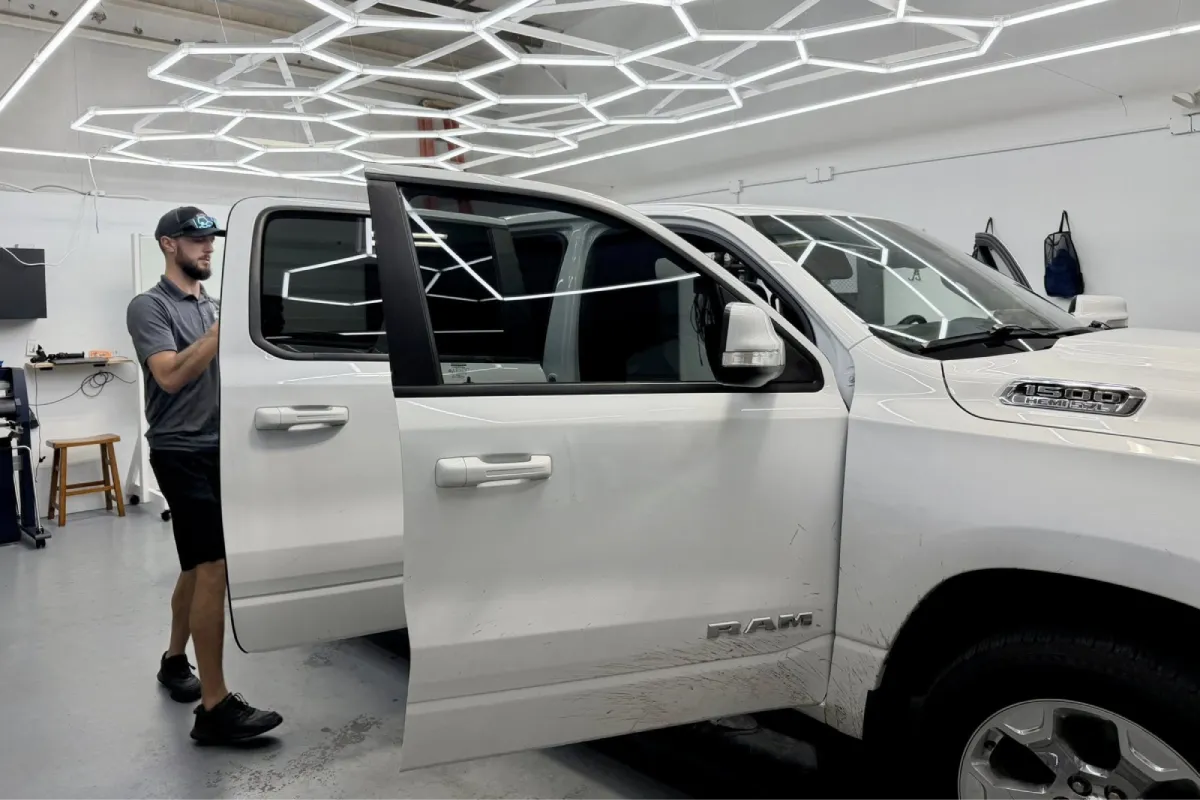
Automotive window tinting reduces interior heat by utilizing advanced multi-layered films to reflect and absorb solar infrared radiation before it penetrates the cabin. By maintaining a lower ambient temperature inside the vehicle, the load on the air conditioning system is significantly decreased, which directly improves fuel efficiency in combustion engines and extends battery range in electric vehicles.
The Science of Thermal Regulation: How Tint Works
When you park your car under the relentless sun, a common occurrence for commuters in Orlando, the interior can quickly transform into an oven. This is due to solar heat gain. Sunlight is composed of visible light, ultraviolet (UV) rays, and infrared (IR) rays. While visible light allows us to see, infrared rays are the primary culprits behind that “burning” sensation on your skin and the skyrocketing temperatures of your dashboard.
High-quality window tinting acts as a sophisticated filter. Rather than just being a dark piece of plastic, modern films are engineered with microscopic layers of metallic or ceramic particles. These particles are tuned to specific wavelengths. They allow visible light to pass through so you can see safely, while simultaneously bouncing infrared heat back away from the glass. This process, known as Total Solar Energy Rejection (TSER), is the gold standard for measuring how well a film will keep you cool.
Comparison of Tinting Technologies
To understand how to get the most “bang for your buck” regarding efficiency, it is essential to compare the materials used in the industry today.
| Feature | Standard Dyed Film | Carbon Film | Ceramic Film |
| Heat Rejection | Low to Moderate | Moderate to High | Excellent |
| UV Protection | Basic (99%) | 99% | 99.9% |
| Signal Interference | None | None | None |
| Durability | May be faded or purple | Long-lasting | Lifetime |
| IR Rejection | Minimal | Significant | Maximum (up to 98%) |
For residents seeking window tinting in Winter Springs, choosing between these options often comes down to how much time you spend on the road. While dyed films provide privacy, ceramic films are the true champions of thermal insulation.
Impact on Fuel Efficiency and Energy Consumption
The connection between your windows and your fuel tank is closer than you might think. Most drivers don’t realize that the air conditioning (AC) system is one of the most energy-intensive components of a vehicle.
The Efficiency Chain Reaction
In a standard gasoline-powered vehicle, the AC compressor is driven by the engine’s accessory belt. When the AC is cranked to “Max” to combat the Florida heat, it places a parasitic load on the engine, forcing it to burn more fuel to maintain speed. By installing Winter Springs window tinting, you reduce the initial heat soak of the cabin. This means:
- Lower Initial Temperature: Your car starts at 100°F instead of 140°F.
- Faster Cool-Down: The AC reaches a comfortable temperature in half the time.
- Low-Power Maintenance: Once cooled, the AC can run on a low setting, consuming significantly less fuel.
For those driving electric vehicles (EVs) in areas like Sanford or Longwood, the benefits are even more tangible. EVs use battery power to run electric AC compressors. By reducing the thermal load through high-quality tint, you preserve battery percentage, effectively increasing your total driving range per charge.
Key Specifications and Features
When researching window tinting in Winter Springs, FL, you will encounter several technical terms. Understanding these will help you make an informed decision:
- VLT (Visible Light Transmission): The percentage of light that passes through. Florida law typically requires 28% VLT for front side windows.
- TSER (Total Solar Energy Rejection): The total percentage of solar energy (UV + visible + IR) rejected by the film. A higher number equals a cooler car.
- Selective Infrared Rejection: A feature of premium ceramic films that targets the specific “heat” wavelengths without needing the film to be pitch black.
- Low Reflectivity: Ensures that the film doesn’t create a “mirror” effect, which can be dangerous for night driving.
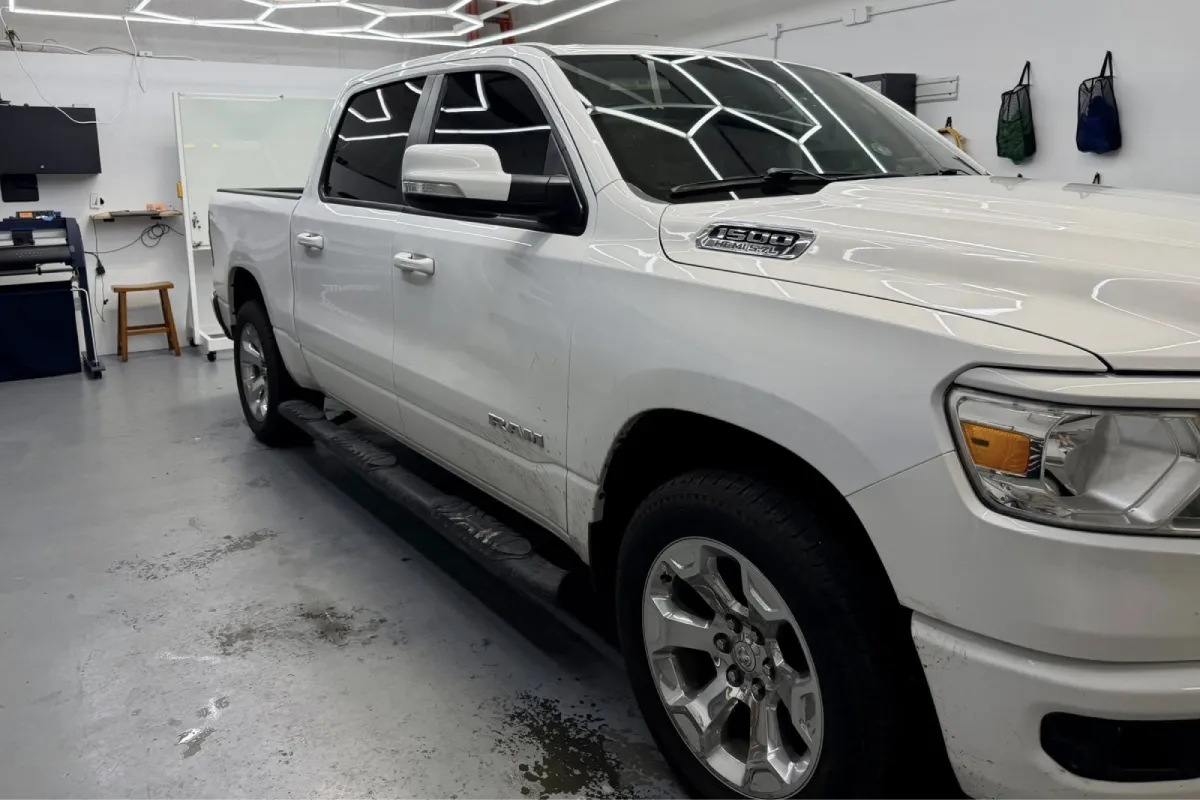
The DDM Efficiency Framework
At DDM Services, we specialize in Union Window Tint for superior heat rejection, engineered to deliver maximum comfort and performance in real-world driving conditions. Our installations are designed to improve privacy and interior protection while maintaining a clean, factory-quality appearance that enhances your vehicle’s overall aesthetic.
Every film we install is built with advanced technology that provides UV protection to keep your interior safe, preventing fading, cracking, and long-term sun damage to your dashboard, seats, and trim. By significantly reducing solar heat gain, our solutions help keep your car cooler and more comfortable, especially during peak summer conditions.
Beyond comfort, our tint systems are designed to boost privacy and security, making it harder for outsiders to see into your vehicle while adding an extra layer of protection for valuables inside. At the same time, they help protect your upholstery from fading, ensuring your interior maintains its original color, texture, and quality over time.
With 20+ years of experience, DDM Services is committed to protecting what moves you with expert precision and care. We use high-end materials for long-lasting results, combined with unmatched expertise in automotive protection, ensuring every installation meets strict performance standards.
Our process is defined by precision and quality with every installation, focusing on detail, alignment, and durability from start to finish. We are dedicated to protecting your vehicle’s value and aesthetic, helping you preserve your investment with top-quality protection that stands the test of time.
At DDM Services, we believe in delivering more than just tint; we deliver confidence. Our promise is simple: enjoy flawless results every time.
Debunking the “Darker is Cooler” Myth
One of the most persistent myths in the automotive world is that a darker tint automatically provides better heat rejection. This is a misconception that can lead many car owners to choose illegal or low-visibility films unnecessarily.
Heat is primarily carried by infrared light, which is invisible to the human eye. A cheap, 5% “Limo Tint” (very dark) made of simple dyed polyester may block visible light, but it can still allow nearly all infrared heat to pass through. Conversely, a high-quality ceramic film with a 70% VLT (nearly clear) can reject more heat than the darkest dyed film. The “coolness” of a film is a result of its construction, specifically its ability to reflect IR radiation, not its shade. This is why many luxury vehicle owners opt for clear ceramic films on their windshields to block heat without sacrificing visibility.
The Environmental and Economic Advantage
Beyond the immediate comfort of a cool seat, window tinting is an environmentally conscious choice. By burning less fuel, you are reducing your vehicle’s carbon footprint. In the long term, the savings at the pump or the charging station often pay for the cost of the tint installation itself. During a recent audit for a client, we calculated that the reduction in AC usage during the peak summer months contributed to a noticeable 3-5% improvement in overall fuel economy.
Experience the DDM Services Difference
At DDM Services, we are more than just a service provider; we are your partners in vehicle preservation. Our brand is built on being professional, dependable, and strictly customer-focused. We understand that your vehicle is a significant investment, and our mission is to protect it with the same attention to detail we would use on our own cars.
We believe in integrity and quality. That is why we use premium products and employ professionally trained technicians who focus on getting the job done right the first time. When you choose us, you are choosing a team that values your comfort and your vehicle’s longevity.
Are you ready to transform your driving experience and protect what moves you? Contact us today!
Don’t let the heat degrade your comfort or your car’s interior. Whether you need window tinting, ceramic coating, or professional detailing, we are here to provide tailored solutions with the expertise you deserve.
Frequently Asked Questions
1. Does window tinting interfere with my GPS or cell signal?
If you choose a metallic film, it might. However, at DDM Services, we primarily use nano-ceramic technology, which is non-conductive and non-metallic, ensuring zero interference with your electronics, GPS, or mobile phone signals.
2. Can window tinting actually save me money?
Yes. By reducing the frequency and intensity of your AC usage, you improve your MPG (miles per gallon) or Wh/mi (watt-hours per mile for EVs). Additionally, it prevents expensive interior damage from UV rays, preserving your car’s resale value.
3. How long should I wait to roll down my windows after installation?
We recommend waiting at least 3 to 5 days. This allows the moisture used during the application of your window tinting to fully evaporate and the adhesive to bond permanently to the glass.
4. Is the windshield allowed to be tinted?
In Florida, you can apply a clear, non-reflective tint to the entire windshield (often a ceramic film for heat rejection) or a darker strip (the “AS-1 line”) at the top. This is highly recommended for maximum heat reduction.