
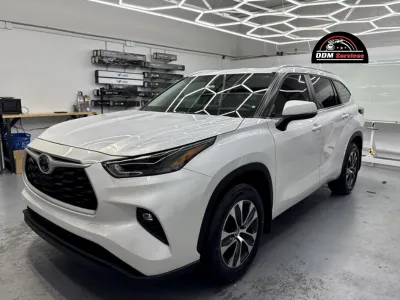
High-end ceramic paint typically dissipates surface heat better than vinyl wrap due to its lower thermal mass and higher emissivity. While vinyl acts as a thin insulating layer that can trap heat against the body of the vehicle, ceramic-infused coatings are engineered to shed thermal energy and reflect infrared radiation more efficiently. This makes ceramic options a superior choice for those prioritizing heat rejection and surface cooling in intense environments.
Understanding the Thermal Dynamics of Automotive Surfaces
When choosing between a color change and a protective coating, many owners focus solely on the visual outcome. However, in regions with high solar density, the thermal performance of your vehicle’s exterior is a critical factor in both comfort and material longevity. The “heat soak” effect, where a vehicle continues to radiate heat long after the sun has set, is a common frustration for drivers.
A vinyl wrap in Orlando, FL serves as a physical “skin” over the paint. While modern films are incredibly advanced, they are essentially polymers, which are natural insulators that hold onto energy. On the other hand, high-end ceramic paints or coatings are inorganic. They are designed to reflect a broader spectrum of the sun’s rays, including the infrared (IR) spectrum responsible for the sensation of heat.
The Science of Heat Dissipation: 4 Key Differences
To understand why ceramic options often win the thermal battle, we have to look at how these materials interact with the environment:
- Reflectivity: Ceramic coatings are engineered with nanotechnology that reflects a higher percentage of IR rays compared to standard vinyl. This prevents the heat from being absorbed into the metal panels in the first place.
- Heat Transfer: Metal panels under a traditional vinyl wrap tend to stay “hot to the touch” significantly longer. During a recent audit for a client in Winter Springs, we noted that wrapped surfaces reached equilibrium with the ambient air much more slowly than ceramic-treated panels.
- Surface Energy: Ceramic surfaces are “low energy.” This technical term means they don’t just repel water and dirt; they also shed the environmental heat that contributes to “paint baking” and interior cabin temperature spikes.
- Cooling Rate: Because ceramic layers are microns thin, they do not provide the same “insulation blanket” effect that a 3.5-mil or 4-mil vinyl film does, allowing the vehicle to reach ambient temperature faster once in the shade.
The Precision Aesthetics & Preservation Framework
At DDM Services, we don’t believe in “off-the-shelf” solutions. We utilize our proprietary Precision Aesthetics & Preservation framework to ensure your vehicle survives the harsh elements while looking like a factory masterpiece. This is a four-stage technical lifecycle designed for high-performance vehicle transformations.
1. Substrate Decontamination & Digital Templating
Before any material touches your car, we perform a deep chemical and mechanical decontamination. Whether you are seeking a vinyl wrap in Orlando or a ceramic application, the bond is only as good as the surface beneath it. We use digital templating to ensure that every piece of material is sized perfectly, reducing the need for stretching, which can thin out UV-protective layers.
2. Thermal Manipulation & Application
This is where the material is finalized. We use controlled heat to “relax” the material into the complex curves of your vehicle. By utilizing Thermal Manipulation, we ensure that the adhesive reaches its maximum bonding potential without being overstressed. This is vital for maintaining the integrity of the film when humidity levels spike.
3. Zero-Invasive Installation
Our technicians are trained in Zero-Invasive Installation technology. This means we achieve a “paint-like” factory finish without blades ever touching your original clear coat. Whether we are applying a color-change film or a protective ceramic layer, your factory finish remains pristine underneath.
4. The “Second Skin” Result
The goal of our framework is to create a reversible, UV-resistant “Second Skin.” This provides a durable barrier against the intense sun, allowing for complete aesthetic customization while preserving the underlying factory finish and long-term resale value. For those who want the best of both worlds, we often recommend our “Hybrid Approach”, applying a ceramic top-layer over an Orlando, FL vinyl wrap to combine the style of vinyl with the heat-shedding properties of ceramic.
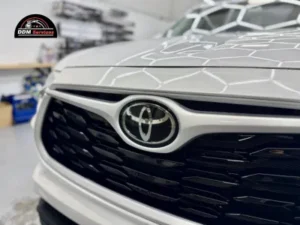
Common Myth: “Dark Wraps Will Damage Your Engine”
A frequent myth among enthusiasts is that a dark Orlando vinyl wrap will cause the engine to overheat by “trapping” heat within the engine bay. This is a misunderstanding of automotive cooling. While a dark surface will indeed be hotter to the touch and can increase the temperature of the metal hood itself, modern automotive cooling systems are closed-loop and exceptionally efficient.
The cooling system relies on the radiator and coolant flow, not the ambient dissipation of heat through the hood’s metal. The real risk of a dark wrap isn’t to your engine; it’s to the vinyl itself. Without proper UV protection, dark pigments absorb more energy, which can lead to premature cracking or fading. This is why our framework is so essential; it ensures the material is treated to handle the thermal load.
Choosing the Right Protection for Your Investment
When you look at your car, you see more than just a mode of transportation; you see an investment. Whether you are driving through the busy streets of the Downtown Business District or parked at a home in Lake Nona, your vehicle is constantly under attack from UV rays, acidic bird droppings, and intense thermal cycles.
Our team at DDM Services is dedicated to being your trusted expert. We are professional, dependable, and customer-focused, ensuring that every project is done right the first time. We believe in using premium products, like Union Window Films, and employing professionally trained technicians who focus on the fine details.
People Also Ask (FAQ)
Does a vinyl wrap protect my car from the sun? Yes, a high-quality wrap acts as a UV shield, preventing the sun from fading your factory paint. However, the wrap itself requires maintenance to prevent it from becoming brittle over time.
How long does a vinyl wrap last in a hot climate? Typically, a professionally installed wrap in a high-UV environment lasts 3 to 5 years. Using our framework can help maximize this lifespan by ensuring optimal adhesive bonding and UV resistance.
Can I put a ceramic coating on top of a vinyl wrap? Absolutely. The ceramic coating adds an extra layer of hydrophobicity and helps shed surface heat, which protects the vinyl from “baking” in the sun.
Is ceramic paint the same as a ceramic coating? Not exactly. Ceramic paint refers to specialized automotive paints infused with ceramic particles. A ceramic coating is a liquid polymer applied over existing paint or vinyl to provide a protective, heat-reflective layer.
Ready to Protect Your Vehicle?
Don’t let the sun dictate the lifespan of your vehicle’s finish. Whether you are interested in the aesthetic versatility of a vinyl wrap or the superior heat dissipation of a high-end ceramic solution, DDM Services is here to guide you.
Contact us today for a free quote and let our expert technicians help you find the perfect “Second Skin” for your vehicle.