
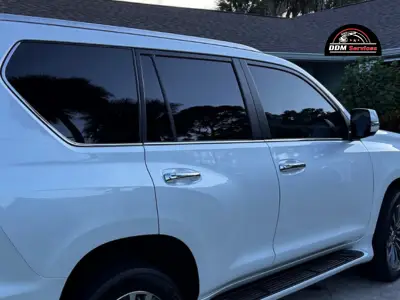
The total cost of a professional window tinting application is primarily determined by the quality and chemical composition of the film material, with a significant price distinction between standard carbon and advanced ceramic options. While carbon films provide a matte finish and basic heat rejection, ceramic films utilize non-conductive, nanoscopic particles to block a much higher percentage of infrared light and UV radiation without interfering with electronic signals, naturally commanding a higher investment. This baseline material cost is then scaled against the specific dimensions and total number of glass panels being treated, as larger SUVs and complex coupes require more raw material and precision trimming than a standard sedan.
Beyond the physical film, the final invoice is heavily influenced by the professional labor rates required for a seamless, “factory-look” installation and the inherent complexity of the vehicle’s glass geometry. For instance, deep-curved rear windshields or intricate “quarter-glass” windows demand a higher level of technical heat-shrinking and specialized micro-edge shaving. Furthermore, if a vehicle arrives with pre-existing, failing film, the intensive process of removing old, bubbling adhesive without damaging the sensitive rear defroster lines can add significant time to the project. Ultimately, these factors combine to ensure that the final price reflects not just the film itself, but a comprehensive restoration of the vehicle’s thermal efficiency and aesthetic clarity.
1. Material Choice: Engineering vs. Aesthetics
The film technology you select is the largest variable in your quote. While basic dyed films provide privacy and a darker look, they lack the heat-rejection properties required for long-term comfort. Carbon films offer a matte finish and better UV protection without interfering with cell signals, whereas ceramic films utilize nanoparticle technology to block the highest percentage of infrared heat. For high-performance window tinting in Orlando, ceramic is often the preferred choice because it maintains its color and structural integrity despite constant solar exposure.
2. Vehicle Surface Area and Glass Geometry
The physical blueprint of your vehicle dictates the amount of raw material and labor hours required. A standard two-door coupe uses less film than a full-size SUV with a panoramic sunroof or multiple side panels. Beyond square footage, the curvature of the glass matters; rear windshields with steep angles require a skillful heat-shrinking process to prevent creasing. Some modern vehicles also feature complex “vent windows” that demand extra precision during a window tinting in Orlando, FL installation.
3. Surface Preparation and Existing Film Removal
Installation costs can increase if the glass requires restorative cleaning or the removal of old, degraded tint. Removing “purple” or bubbling film is a labor-intensive process involving industrial steamers to preserve the rear defroster lines. During a recent audit for a client in Lake Nona, we found that adhesive residue from a previous low-quality install required two hours of forensic cleaning before the new substrate could be applied. Ensuring a pristine surface is the only way to prevent contamination and ensure a factory-grade bond.
4. The DDM: Thermal-Optical Synthesis
At DDM Services, we utilize a proprietary technical framework known as Thermal-Optical Synthesis (TOS). This isn’t just about darkening windows; it is the scientific calibration of heat rejection against visual transparency.
Understanding Thermal-Optical Synthesis
A common misconception among consumers is that a darker tint shade inherently provides superior cooling, but our Thermal-Optical Synthesis framework proves that heat rejection is a matter of molecular engineering rather than visual density. This methodology prioritizes the nanoscopic density of the ceramic layers, which are specifically designed to filter out the infrared spectrum and UV radiation regardless of how much visible light is blocked. By focusing on the structural composition of the film, we can achieve extreme thermal insulation in lighter shades that would traditionally require a much darker, more obstructive dye to reach similar performance levels.
The core of this synthesis lies in balancing high-performance “Thermal” rejection with “Optical” clarity and safe visible light transmission ($VLT$). This balanced approach creates a sophisticated shield that effectively neutralizes radiant heat before it can penetrate the glass substrate, keeping the cabin significantly cooler during peak daylight hours. Because the cooling power is derived from the ceramic’s internal heat-rejection properties rather than a dark pigment, drivers enjoy maximum climate control without the compromised nighttime visibility or “limo-tint” aesthetics that often hinder safety and navigation.
5. Environmental Factors and Local Longevity
Where you drive changes the “stress test” your window film must pass daily. In regions with high humidity and extreme UV indices, entry-level films often fail within two years. While performing a quality check for a fleet in Winter Park, we observed that cheaper films had reached their thermal limit, leading to adhesive failure. Investing in professional Orlando window tinting ensures you receive a product rated for local environmental stressors, backed by a lifetime warranty against peeling or delamination.
The DDM Professional Standard
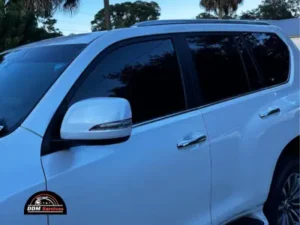
The proprietary Thermal-Barrier & Optical-Clarity framework represents a high-level engineering approach to heat management, moving beyond the capabilities of standard retail-grade films. By utilizing professional-grade Union Window Tint in either advanced carbon or nanoscopic ceramic compositions, we create a specialized shield specifically calibrated for the intense solar radiation profiles found in the South Florida climate. This framework doesn’t just darken the glass; it functions as a spectral filter that selectively blocks up to 99% of harmful UV rays and a significant portion of infrared heat ($IRR$) while maintaining high-definition visibility for the driver. This ensures that even during the peak of a tropical summer, the vehicle’s interior remains thermally stable, protecting both the passengers’ comfort and the long-term structural integrity of the cabin’s leather and vinyl components.
To guarantee a factory-standard finish and maximum longevity, the entire process follows a rigorous, three-stage lifecycle. It begins with a meticulous micro-decontamination phase, where the glass is chemically stripped of environmental fallout to ensure an absolute molecular bond. This is followed by a precision heat-shrinking and edge-contouring stage, where our technicians “mold” the film to the specific glass curvature, eliminating light gaps and preventing future peeling. Finally, the application undergoes a controlled curing and optical-clarity inspection, stabilizing the pressure-sensitive adhesive and ensuring a distortion-free field of vision. This systematic methodology ensures that the Union Window Tint performs as a permanent barrier rather than a temporary aesthetic addition.
-
Stage 1: Forensic Cleaning & Substrate Prep
The initial phase of the framework involves a multi-step, laboratory-grade decontamination process designed to meticulously strip the glass of all microscopic environmental fallout. By removing embedded road film, industrial pollutants, and oils that standard cleaning often misses, our technicians ensure a surgically clean surface that guarantees maximum material adhesion. This level of preparation eliminates the risk of premature peeling or bubbling, creating the perfect molecular foundation for a bond that lasts the lifetime of the vehicle.
-
Stage 2: Precision Computer-Cut Application
To ensure an absolute, factory-style finish, we utilize an advanced digital templating system that precisely maps the unique dimensions of your vehicle’s glass. This precision-cutting technology allows us to pre-shape the film to a fraction of a millimeter, completely eliminating the outdated and risky practice of hand-cutting material directly against your vehicle’s delicate exterior. The result is a seamless edge-to-edge fit that aligns perfectly with your window seals, providing a sophisticated look without the “light gaps” or jagged edges common in manual installations.
-
Stage 3: Curing & Quality Authentication
The final stage focuses on the controlled stabilization of the pressure-sensitive adhesive system to lock in flawless optical clarity and structural integrity. During this phase, the film undergoes a specialized curing process that allows any residual mounting solution to evaporate, ensuring the nanoscopic ceramic layers are fully integrated with the glass substrate. Every project concludes with a rigorous quality authentication inspection, where our lead technicians verify that the installation meets our strict standards for heat rejection, UV protection, and distortion-free visibility.
At DDM Services, the culmination of our precision-bonded application is a permanent, high-performance barrier that does far more than just darken your glass. This specialized shield is engineered to block up to 99% of harmful UV radiation and significantly minimize radiant heat transfer, which actively stabilizes cabin temperatures and reduces the strain on your vehicle’s air conditioning system.
Ready for a cooler, more protected drive? Schedule your service!
People Also Ask (FAQ)
Is ceramic window tint worth the additional investment?
Ceramic tint is a superior investment because it utilizes non-conductive, nanoscopic particles to block up to 99% of infrared heat without interfering with GPS or cellular signals. Unlike metallic films, it provides the highest level of thermal insulation and optical clarity while ensuring your vehicle’s electronic systems remain fully functional.
What is the typical timeframe for a professional installation?
A standard professional installation for most vehicles is typically completed within a window of 2 to 4 hours, depending on the total number of glass panels. If your vehicle requires the removal of old, bubbling film, please expect the process to take an additional 90 minutes to ensure the glass is properly decontaminated.
Why does my new window tint appear slightly hazy?
A slight haziness is a completely normal part of the curing process caused by residual mounting solution trapped between the film and the glass. This moisture typically evaporates within 3 to 5 days as the film breathes, though the timeline may vary slightly depending on the amount of direct sun exposure.